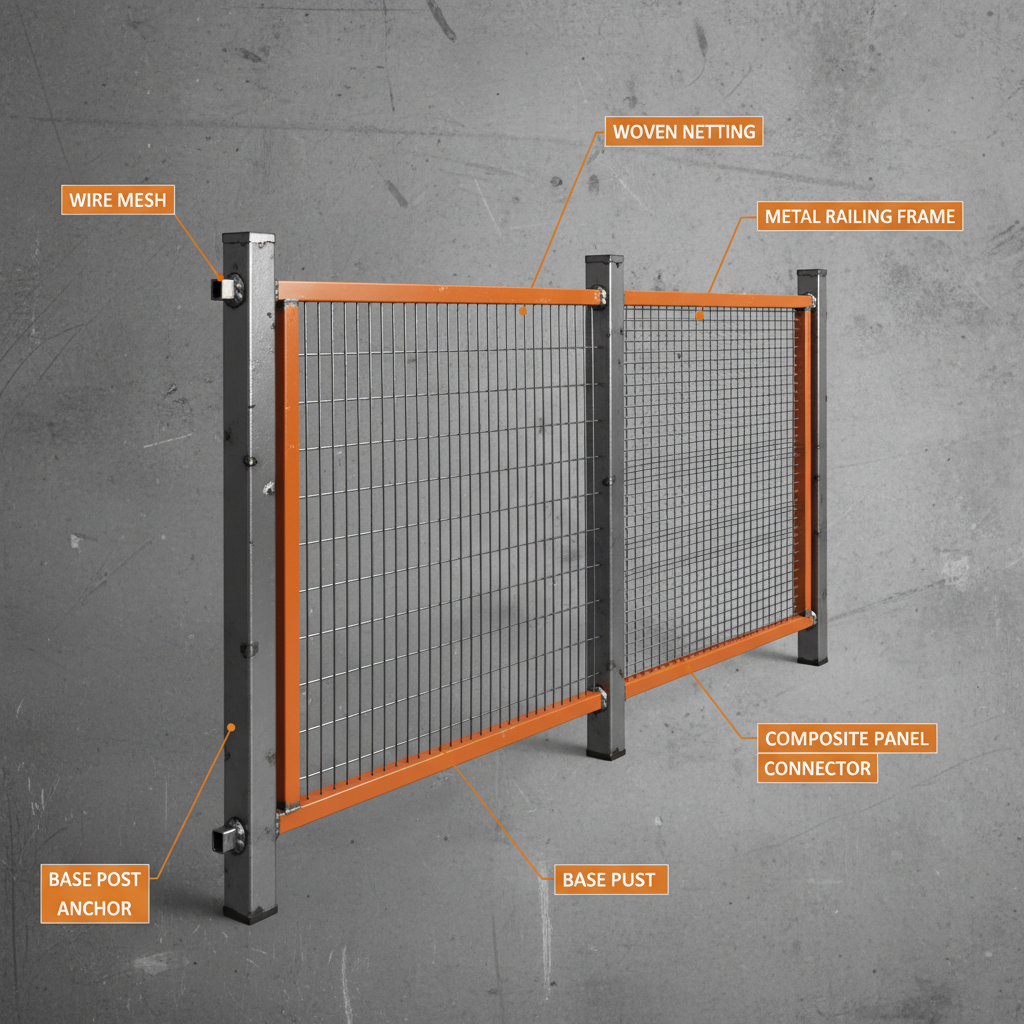
Selecting the right perimeter boundary is often a balance between security requirements, aesthetic preferences, and long-term maintenance costs. For many property owners, the decision to buy fence panels involves navigating a complex array of materials, from traditional chain link to modern 3D welded mesh.
The shift toward modular panel systems has fundamentally changed how residential and industrial spaces are secured. Unlike traditional rail-and-post constructions, pre-fabricated panels offer tighter quality control and significantly faster installation timelines, reducing labor costs and ensuring structural uniformity across large perimeters.
This guide examines the technical nuances of panel selection, the impact of surface treatments on longevity, and the practical framework for matching specific fence types to their intended environmental stressors.


Historically, perimeter fencing relied on site-built structures where materials were cut and fastened manually. The transition to modular panels—specifically 3D and Euro-style panels—represents a shift toward industrial standardization. This evolution was driven by the need for consistency in security ratings and the desire for "plug-and-play" installation.
Modern modularity allows for the integration of specialized components like adjustable U-forms and concrete post anchors, enabling the fence to adapt to uneven terrain without compromising the structural integrity of the panels.
At its core, a high-quality welded panel is defined by its wire gauge and the strength of its weld points. The "3D" designation refers to the V-shaped bends integrated into the panel. These bends are not merely aesthetic; they provide significant structural rigidity, preventing the panel from bowing under pressure or wind loads, which is a common failure point in flat 2D mesh.
The design logic focuses on the intersection of horizontal and vertical wires. In professional-grade systems, the welding process must ensure full penetration without compromising the wire's temper. This ensures that the panel maintains its shape even when subjected to impact or attempted breaches.
Supporting hardware plays an equal role in performance. The use of specialized fittings for square or round posts allows for a secure connection that distributes stress evenly across the panel, preventing localized fatigue at the fastening points.
The longevity of any outdoor metal structure is dictated by its surface treatment. In the metal products industry, galvanization remains the gold standard for preventing oxidation. By creating a sacrificial zinc layer, the base steel is protected from the corrosive effects of moisture and salt air.
The synergy between hot-dip galvanizing and powder coating provides a dual-layer defense system, where the zinc prevents rust and the powder coat provides UV resistance and color customization.
Hebei Houtuo Co., Ltd. implements these treatments across their range, from basic bailing wire to complex Euro fence sets. For environments with high humidity, the thickness of the galvanized layer is the primary determinant of how many years the product can withstand the elements before requiring maintenance.
When deciding which system to deploy, users must evaluate different panel types against specific performance metrics: structural rigidity, installation speed, security level, and weather resistance. A 3D fence panel typically offers a higher rigidity index than a standard chain link fence due to its welded intersections and V-bends.
Conversely, chain link systems offer superior flexibility for extremely irregular terrain but lack the impact resistance of welded mesh. The following index illustrates the relative suitability of common panel types across these key operational vectors.
In a typical industrial setting, the primary objective is high-visibility security. Here, 3D and Euro fence panels are preferred because they provide a clear line of sight for surveillance cameras while remaining physically difficult to climb. The integration of fence posts and specialized fittings ensures the perimeter can withstand accidental impacts from machinery or vehicles.
For residential or gardening applications, the focus shifts toward aesthetics and "humane" boundaries. Products such as the ECO Garden Gate or double wire panels are used to create orderly borders that don't feel oppressive. In these scenarios, powder-coated finishes in green or black are often selected to blend the metal structure into the natural landscape.
The industry is currently moving toward "intelligent perimeters." This involves the integration of sensors and electric fence posts into standard panel systems. The goal is to transform a passive physical barrier into an active monitoring system that can alert owners to breaches in real-time without requiring a constant human presence.
Sustainability is also driving a change in material sourcing and treatment. There is an increasing demand for powder coatings that are VOC-free and galvanizing processes that reduce zinc waste. The industry is exploring alloys that offer the same strength as steel but with a lower carbon footprint during production.
Furthermore, the rise of DIY installation is pushing manufacturers to create "Fence Sets" that include everything from the panel to the ground screw anchors, reducing the need for professional contractors for small-to-medium scale residential projects.
When preparing to buy fence panels, a systematic trade-off analysis is necessary. One cannot maximize security, minimize cost, and ensure a "invisible" aesthetic simultaneously. Most buyers must prioritize two of these three factors based on their specific site requirements.
For instance, those prioritizing maximum durability in coastal areas should prioritize hot-dip galvanizing over simple powder coating, even if it results in a slightly more industrial appearance. Similarly, those focusing on livestock containment might find barbed wire or grassland fences more cost-effective than 3D panels.
The following table provides a comparative framework to help buyers align their technical requirements with the correct product category.
| Requirement | Recommended Type | Key Technical Factor | Relative Cost |
|---|---|---|---|
| High Security | 3D/Euro Panel | Weld Strength/V-Bend | Moderate-High |
| Coastal Durability | Galvanized Mesh | Zinc Coating Thickness | Moderate |
| Agricultural | Field/Grassland | Wire Tension/Gauge | Low |
| Garden Deco | ECO Garden Gate | Powder Coat Finish | Moderate |
| Erosion Control | Deco Gabion | Mesh Aperture/Fill | High |
| Temporary Barrier | Chain Link Set | Ease of Assembly | Low-Moderate |
The "3D" refers to the V-shaped bends (folds) integrated into the horizontal wires of the panel. These bends act as structural reinforcements, providing significantly higher rigidity and resistance to bending or impact compared to a flat 2D panel. While 2D panels are lighter and cheaper, 3D panels are the standard for security and perimeter boundaries due to their enhanced stability.
Galvanization involves coating the steel wire with a layer of zinc. Zinc is more chemically active than steel, so it acts as a "sacrificial anode." When exposed to moisture and oxygen, the zinc corrodes first, protecting the underlying steel from oxidation. Hot-dip galvanizing provides the thickest and most durable layer, making it ideal for outdoor environments and high-moisture areas.
For gardens, a balance of aesthetics and function is key. Powder-coated 3D panels in green or black are popular as they blend with foliage. For lower-profile boundaries, border fences or ECO garden gates are more appropriate. The choice depends on whether the goal is strictly decorative, keeping pets in (e.g., puppy playpens), or keeping wildlife out (e.g., deer fencing).
Yes, modular systems are designed for versatility. By using adjustable U-forms and varying the depth of the fence posts or using concrete post anchors, panels can be "stepped" to follow the slope of the ground. This ensures the perimeter remains secure and visually consistent even on hills or irregular landscapes.
When purchasing in bulk, prioritize the certification of the wire gauge and the coating thickness (micron level). Ensure the supplier provides a complete set, including the necessary fittings and accessories, to avoid compatibility issues. Verifying the manufacturing process—such as whether the panels are hot-dip galvanized before powder coating—is critical for long-term ROI.
Welded mesh panels offer superior rigidity, a cleaner aesthetic, and higher security as they cannot be easily deformed or cut compared to the woven nature of chain link. However, chain link is generally more flexible and easier to transport in large quantities. Welded panels are better for defined boundaries and security, while chain link is often used for sports fields and large agricultural enclosures.
The decision to invest in modular fence panels is ultimately a decision about risk management and long-term asset protection. By understanding the relationship between material treatments, structural design like V-bends, and the specific stressors of the installation environment, property owners can avoid the common pitfalls of premature corrosion and structural failure.
As the industry moves toward more sustainable coatings and integrated security technology, the value of high-quality, standardized hardware becomes even more apparent. Whether for a small garden or a large industrial complex, the right selection of panels and fittings ensures a boundary that is safe, durable, and functionally efficient.