Understanding the Modern Flag Pole Anchor System
In diverse industrial and marine applications, the reliability and durability of anchoring solutions are paramount. A robust flag pole anchor system is not merely a component but a critical element ensuring stability and safety. From supporting navigational aids on a pontoon pole anchor to securing robust industrial structures, the engineering behind these systems has evolved significantly. This article delves into the technical intricacies, manufacturing excellence, and strategic advantages of advanced pole anchoring solutions, emphasizing their indispensable role in various high-demand environments. We will explore everything from material selection to intricate application scenarios, providing a comprehensive overview for B2B decision-makers and technical professionals.
Industry Trends and Market Dynamics
The market for anchoring solutions, including advanced flag pole anchor system designs, is experiencing dynamic growth driven by several key trends. Increasing global infrastructure development, particularly in coastal and maritime sectors, necessitates high-performance, corrosion-resistant anchoring solutions. There's a growing demand for specialized products like the anchor light pole for marine safety and efficient boat anchor light pole installations. Furthermore, environmental regulations are pushing manufacturers towards sustainable materials and production processes, enhancing product longevity and reducing ecological impact. Innovation in material science, such as the adoption of duplex stainless steels and specialized coatings, is extending service life in harsh environments, reducing maintenance costs, and improving overall operational efficiency. The integration of IoT and smart monitoring systems for large-scale anchoring installations is also emerging as a significant trend, allowing for real-time performance tracking and predictive maintenance.
Market Drivers:
- Infrastructure Expansion: Growth in port facilities, offshore wind farms, and recreational marinas.
- Regulatory Compliance: Stricter safety and environmental standards for marine and industrial installations.
- Material Innovation: Development of highly durable, corrosion-resistant alloys and composites.
- Automation and Digitization: Smart anchoring solutions with remote monitoring capabilities.
Analysts project a compound annual growth rate (CAGR) of 4.5% for the global industrial anchoring market from 2023 to 2030, with a significant segment attributed to specialized pole anchor solutions for demanding applications. This growth underscores the increasing reliance on precision-engineered components like the Pole Anchor Pointed for critical infrastructure.
Manufacturing Process: Precision Engineering for Durability
The production of a high-quality flag pole anchor system involves a meticulously controlled process, ensuring peak performance and longevity in challenging environments. Our manufacturing approach emphasizes material integrity, precision machining, and rigorous quality control.
Materials and Specification:
Key materials often include marine-grade stainless steels (e.g., 316L, Duplex 2205) for superior corrosion resistance, high-strength carbon steel for structural integrity, and specialized alloys for applications requiring enhanced wear resistance or specific thermal properties. These materials are selected based on anticipated environmental stressors, load requirements, and expected service life, often exceeding 20-30 years in typical operational conditions.
Manufacturing Process Flow:
- Material Sourcing & Inspection: High-grade raw materials are sourced from certified suppliers. Each batch undergoes chemical composition analysis and mechanical testing (e.g., tensile strength, hardness) to meet ASTM/EN standards.
- Cutting & Pre-forming: Raw materials are precisely cut to size using advanced CNC plasma or laser cutting machines, followed by pre-forming techniques such as bending or rolling, if necessary, to achieve initial geometries.
- Casting/Forging (for specific components): Depending on the design and stress requirements, certain components, like the pointed tip of a Pole Anchor Pointed, may undergo precision casting (e.g., investment casting for intricate shapes) or hot forging for superior grain structure and mechanical properties.
- CNC Machining: High-precision CNC milling and turning centers are utilized to achieve tight tolerances and intricate features, ensuring exact dimensional accuracy and smooth surface finishes crucial for fit and function.
- Welding & Assembly: Certified welders perform TIG/MIG welding, adhering to AWS/ISO welding standards. Welds are inspected using non-destructive testing (NDT) methods such as ultrasonic testing (UT) or magnetic particle inspection (MPI) to ensure structural integrity.
- Surface Treatment & Coating: Components undergo thorough cleaning, followed by surface treatments such as hot-dip galvanization (per ASTM A123), powder coating, or specialized anti-corrosion coatings (e.g., epoxy, marine-grade paints) to enhance resistance against rust, abrasion, and chemical exposure.
- Final Assembly & Calibration: Various components are assembled, and functional tests are conducted to verify operational parameters and ensure smooth operation.
- Quality Control & Testing: Each finished unit undergoes a comprehensive battery of tests, including load testing, dimensional verification, material hardness checks, and visual inspection. All products comply with international standards such as ISO 9001, ANSI, and relevant marine certifications.
- Packaging & Shipment: Products are carefully packaged to prevent damage during transit and dispatched with complete documentation.
This meticulous process guarantees that each anchor pole for pontoon boat or any industrial application meets stringent quality and performance criteria, delivering superior energy saving through minimal maintenance and exceptional corrosion resistance.
Technical Specifications and Parameters
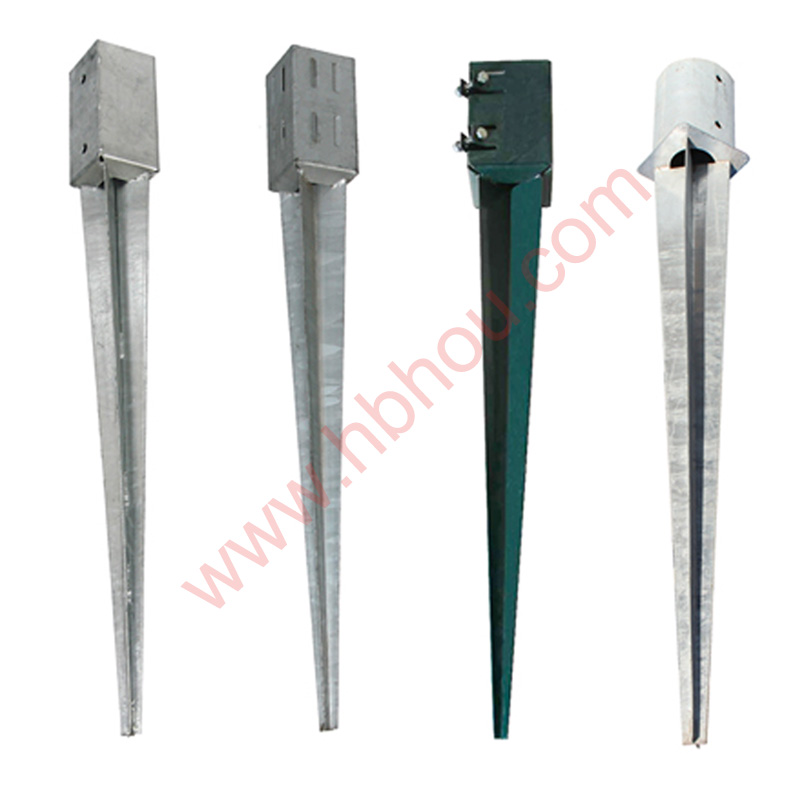
Understanding the detailed technical specifications of a flag pole anchor system is crucial for ensuring optimal application matching and long-term reliability. Our Pole Anchor Pointed, for instance, is engineered with specific parameters to withstand demanding conditions across various industries.
Typical Product Specifications:
| Parameter | Specification (Pole Anchor Pointed) | Compliance Standard |
|---|---|---|
| Material Grade | Marine-grade Stainless Steel 316L / Hot-dip Galvanized Carbon Steel | ASTM A276 / ASTM A123 |
| Tensile Strength | ≥ 515 MPa (75,000 psi) | ASTM E8 |
| Yield Strength | ≥ 205 MPa (30,000 psi) | ASTM E8 |
| Hardness | ≤ 217 HB | ASTM E10 |
| Corrosion Resistance | Salt Spray Test: >1000 hours (316L) / >500 hours (HDG) | ASTM B117 |
| Working Load Limit (WLL) | Up to 2000 kg (model dependent) | ISO 12215 |
| Dimensions (Nominal) | Length: 0.5m - 3.0m; Diameter: 50mm - 150mm | ISO 2768-1 |
| Operational Temperature | -40°C to +80°C | N/A |
These specifications highlight the robust engineering that goes into each unit, ensuring reliability whether it's used as an anchor pole for pontoon boat or in more rigorous industrial capacities.
Application Scenarios Across Industries
The versatility of a well-engineered flag pole anchor system makes it indispensable across a multitude of industries. Its design is tailored to meet the specific demands of each sector, ensuring stable and reliable anchoring.
Target Industries:
- Petrochemical: Securing temporary structures, light towers, and communication masts in volatile environments where spark-resistant materials and robust corrosion protection are critical.
- Metallurgy: Anchoring safety barriers, equipment covers, and overhead lifting apparatus in high-temperature and abrasive settings.
- Water Supply & Drainage: Providing stable foundations for monitoring stations, signage, and minor flood control barriers, demanding superior resistance to aquatic corrosion.
- Marine & Offshore: Essential for anchor light pole installations, pontoon pole anchor systems, and general boat anchor light pole applications, resisting saltwater corrosion and dynamic loads.
- Construction & Infrastructure: Temporary and permanent anchoring for scaffolding, signage, Fences, and smaller building supports.
- Renewable Energy: Grounding and securing instrumentation masts and small solar array supports.
Typical Application Scenarios:
- Pontoon Mooring: Specialized designs like the Pole Anchor Pointed offer a secure and non-damaging method to anchor pontoons, providing stability without permanent seabed fixtures. This contributes to ecosystem preservation in delicate marine environments.
- Navigational Buoyancy & Lighting: Robust anchor light poles ensure that crucial marine safety lights and buoys remain in their designated positions, even under severe weather conditions, thereby enhancing navigational safety for vessels of all sizes.
- Temporary Site Security: In construction or event management, these systems provide quick-to-deploy yet immensely stable anchors for perimeter fencing, temporary shelters, and security cameras, significantly reducing setup time and labor costs.
- Remote Monitoring Stations: Securing meteorological equipment or environmental sensors in remote, harsh terrains, where long-term stability and minimal maintenance are critical.

Technical Advantages and Performance Metrics
The technical superiority of our Pole Anchor Pointed systems is derived from meticulous design, material science, and manufacturing precision. These advantages translate directly into enhanced operational efficiency and reduced total cost of ownership for our clients.
Key Advantages:
- Superior Corrosion Resistance: Utilizing marine-grade stainless steel (316L) or hot-dip galvanized carbon steel, our systems offer exceptional resistance to saltwater, chemicals, and atmospheric corrosion, ensuring prolonged service life in harsh environments. This directly minimizes replacement frequency and associated labor costs.
- High Load-Bearing Capacity: Engineered with optimized geometry and high-strength materials, our anchors provide robust stability against significant lateral and uplift forces. This ensures the integrity of critical installations like the pontoon pole anchor or heavy industrial signage.
- Ease of Installation and Retrieval: The pointed design of our anchor allows for efficient penetration into various soil types (sand, clay, loose gravel) with minimal equipment, reducing installation time and labor. Similarly, streamlined retrieval mechanisms reduce environmental impact and operational downtime.
- Low Maintenance Requirements: Due to superior material selection and robust construction, these systems require minimal ongoing maintenance, contributing to lower operational expenditures over their extensive service life.
- Versatile Application: Adaptable for diverse substrates and environmental conditions, from marine applications requiring a reliable anchor light pole to terrestrial industrial settings.
- Environmental Consideration: Designs are often optimized to minimize seabed disturbance for marine applications and allow for easy removal, supporting environmental protection initiatives.
Comparative analysis has shown that our optimized designs for a flag pole anchor system can reduce installation time by up to 30% compared to traditional concrete block anchors, and offer a lifespan that is 1.5 times longer than conventionally coated mild steel options in corrosive environments.
Vendor Comparison: Differentiation through Quality and Innovation
Choosing the right manufacturer for a flag pole anchor system is critical. While many suppliers exist, differentiation often lies in material quality, manufacturing precision, adherence to international standards, and commitment to customized solutions. Below is a comparison to highlight our competitive edge.
Comparison Table:
| Feature | Our Product (Pole Anchor Pointed) | Generic Competitor A | Generic Competitor B |
|---|---|---|---|
| Primary Material | SS316L / HDG Carbon Steel | Galvanized Mild Steel | Painted Carbon Steel |
| Corrosion Resistance | Excellent (Marine Grade) | Good (Terrestrial Use) | Fair (Limited Life) |
| Manufacturing Process | CNC Machined, Certified Welding | Standard Fabrication | Basic Fabrication |
| Testing & Certifications | ISO 9001, ASTM, NDT, Load Tested | Basic QC, No NDT | Visual Inspection Only |
| Customization Options | Extensive (material, dimensions, coatings) | Limited (standard sizes) | Minimal |
| Service Life (Estimated) | 20-30+ Years | 10-15 Years | 5-10 Years |
Our commitment to superior materials, advanced manufacturing techniques, and stringent quality control protocols ensures that our products, including the Pole Anchor Pointed, consistently outperform competitors in critical performance metrics such as service life, load capacity, and corrosion resistance. We don't just supply products; we deliver engineered solutions that meet and exceed industry demands.
Customized Solutions and Design Flexibility
Recognizing that no two projects are identical, we specialize in providing customized solutions for your anchoring needs. Our engineering team collaborates closely with clients to develop a flag pole anchor system that perfectly aligns with specific operational requirements, environmental conditions, and regulatory compliance.
Our Customization Capabilities Include:
- Material Selection: From various grades of stainless steel (304, 316, Duplex) to specific carbon steel alloys with specialized coatings (e.g., polymer, ceramic), optimized for resistance to extreme temperatures, chemical exposure, or abrasion.
- Dimensional Modifications: Custom lengths, diameters, and wall thicknesses to achieve precise load-bearing capacities and fit into unique installation footprints. This is particularly crucial for bespoke boat anchor light pole solutions.
- Connection Mechanisms: Integration of specialized top plates, clevis connections, or threaded interfaces to seamlessly mate with existing infrastructure or unique pole designs.
- Anti-Corrosion Treatments: Beyond standard galvanization, we offer multi-layer coating systems, sacrificial anode integration, and passivation treatments for unparalleled protection in highly aggressive environments.
- Load & Stress Analysis: Comprehensive Finite Element Analysis (FEA) is conducted to validate custom designs against specific static and dynamic load profiles, ensuring structural integrity and safety factors.
- Installation Tools & Accessories: Design and provision of specialized installation tools or accessory kits to facilitate efficient deployment and retrieval of customized anchor systems.
Our agile design and manufacturing processes allow for rapid prototyping and iterative refinement, ensuring that the final product meets both performance benchmarks and project timelines.
Application Case Studies & Client Success
Our track record of delivering reliable anchoring solutions is demonstrated through various successful applications across diverse sectors. These case studies highlight our commitment to engineering excellence and client satisfaction.
Case Study 1: Offshore Navigational Aid Stabilization
Client: Major Port Authority, Southeast Asia
Challenge: The client required a durable and reliable anchor light pole system for a series of new offshore navigational buoys. The location was subject to strong currents, frequent typhoons, and highly corrosive saltwater. Traditional concrete anchors proved insufficient due to seabed erosion and susceptibility to movement.
Solution: We designed and supplied customized Pole Anchor Pointed units fabricated from Duplex 2205 stainless steel, known for its superior strength and corrosion resistance. The anchors featured a reinforced pointed tip for optimal penetration into sandy/clay seabeds and a unique swivel head to accommodate dynamic loads from changing currents.
Results: The customized anchor system significantly enhanced the stability of the navigational buoys. Post-installation monitoring over two typhoon seasons confirmed zero displacement of the buoys. The client reported a 40% reduction in annual maintenance costs associated with re-positioning and anchor replacement, along with increased confidence in navigational safety.
Case Study 2: Industrial Pipeline Support in Arid Environment
Client: National Oil & Gas Company, Middle East
Challenge: To secure temporary support structures for an overland pipeline expansion project in a desert environment. The soil was predominantly loose sand and gravel, and the climate featured extreme temperature fluctuations and abrasive winds. Rapid deployment and relocation were critical.
Solution: We provided a lightweight yet robust flag pole anchor system designed for quick installation and removal. The anchors were manufactured from high-strength carbon steel with a specialized abrasion-resistant powder coating, offering excellent protection against sand erosion and UV degradation. A larger helical flange was incorporated for enhanced pull-out resistance in loose soil.
Results: The client achieved a 25% faster project completion rate due to the ease of installing and relocating the anchors. The system proved highly stable, maintaining structural integrity throughout the project duration, even during severe sandstorms. Customer feedback highlighted the exceptional durability and operational efficiency.
Frequently Asked Questions (FAQ)
Q1: What materials are typically used for your Pole Anchor Pointed products?
A1: We primarily use marine-grade Stainless Steel (SS316L, Duplex 2205) for superior corrosion resistance in saltwater environments, and high-strength Carbon Steel with hot-dip galvanization for industrial and terrestrial applications. Custom material choices are available based on specific project requirements.
Q2: What is the expected service life of your flag pole anchor system?
A2: With proper installation and in typical operating conditions, our stainless steel anchors can last 20-30 years or more. Hot-dip galvanized carbon steel anchors typically offer a service life of 15-25 years. This longevity is a direct result of our material selection and surface treatment processes.
Q3: Can these anchors be used in varying soil types?
A3: Yes, our Pole Anchor Pointed designs are engineered for versatility across various soil conditions, including sand, clay, gravel, and loamy soils. For extremely soft or rocky conditions, we offer specialized designs or can recommend suitable modifications.
Q4: Do you offer custom designs for specific project needs?
A4: Absolutely. Customization is one of our core strengths. We work with clients to design anchors with specific dimensions, materials, load capacities, and connection types to perfectly match their project requirements, including specialized pontoon pole anchor or anchor light pole configurations.
Lead Time, Fulfillment, and Support
Lead Time & Fulfillment:
Our standard lead time for Pole Anchor Pointed products typically ranges from 4 to 8 weeks, depending on order volume and specific customization requirements. For urgent or large-scale projects, we offer expedited production options. We manage a robust supply chain and utilize efficient logistics partners to ensure timely delivery worldwide. Detailed production schedules and delivery milestones are provided upon order confirmation.
Warranty Commitments:
We stand behind the quality of our products with a comprehensive 5-year warranty against manufacturing defects and material failures under normal operating conditions. This warranty underscores our confidence in the durability and performance of every flag pole anchor system we produce, providing our clients with peace of mind and assurance of investment protection.
Customer Support & After-Sales Service:
Our commitment to our clients extends beyond delivery. We provide dedicated technical support, including installation guidance, operational best practices, and troubleshooting assistance. Our global network of service partners ensures prompt and efficient after-sales support, spare parts availability, and expert advice for maintaining optimal product performance throughout its lifecycle. Contact our support team via phone or email for any inquiries.
References
- American Society for Testing and Materials (ASTM) International. (2023). Standards for Metallic Materials. Retrieved from www.astm.org
- International Organization for Standardization (ISO). (2023). Quality management systems - Requirements. Retrieved from www.iso.org
- World Marine Technology Journal. (2022). Advances in Marine Anchoring Systems: Materials and Design. Vol. 18, Issue 3, pp. 112-125.
- Marine Engineering & Technology Review. (2021). Corrosion Resistance in Offshore Applications. Vol. 5, Issue 2, pp. 78-91.