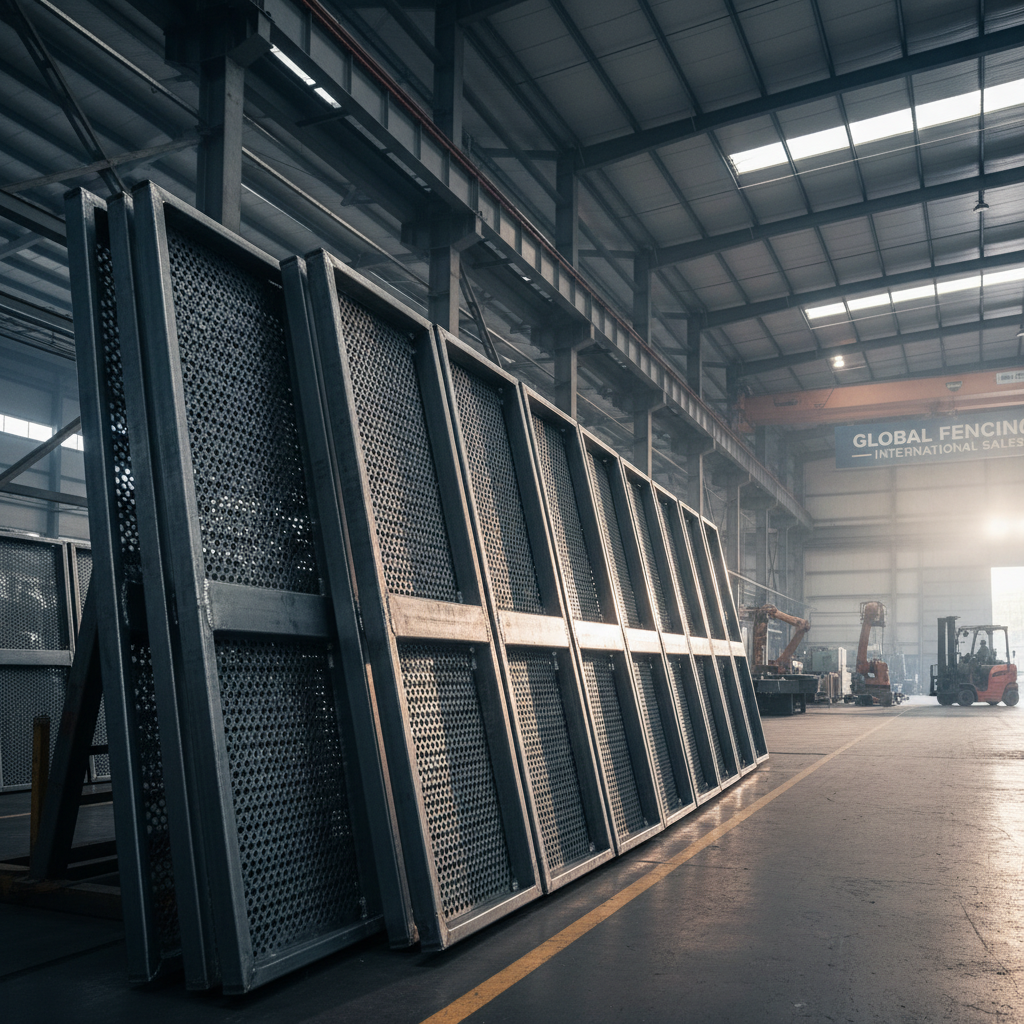
The global procurement landscape for perimeter security is shifting from generic sourcing to specialized technical partnerships. For procurement managers and engineers, identifying a capable wire fence factory is no longer just about comparing unit prices, but about evaluating material metallurgy and manufacturing tolerances that ensure long-term structural integrity.
This transition is driven by increasingly stringent safety regulations and the demand for materials that can withstand aggressive environmental corrosion without compromising tensile strength. When the wrong specifications are selected, the result is premature oxidation and structural failure, leading to costly replacement cycles and security vulnerabilities in industrial and agricultural installations.
This technical analysis explores the critical engineering variables in fence manufacturing, from the precision of wire drawing to the chemistry of galvanization, providing a framework for buyers to evaluate production capabilities and material performance.


The foundation of a high-quality fence lies in the wire drawing process. The reduction of the wire diameter through successive dies must be carefully controlled to avoid internal micro-fractures. If the reduction ratio is too aggressive, the metal develops internal stresses that lead to brittle failure under wind load or impact.
For specialized applications, the use of non-ferrous metals like brass or copper wire is essential. These materials offer superior conductivity and natural corrosion resistance, making them indispensable for filtration systems and high-end architectural elements where aesthetic luster and chemical stability are prioritized over raw tensile strength.
Understanding the relationship between wire diameter and hole size is critical for determining the security level of a mesh system. In plain weave mesh, for example, a wire diameter of 1.00mm coupled with a 2.63mm hole size (7x7 mesh) provides a specific balance of transparency and physical deterrence. These dimensions are not arbitrary; they are calculated based on the intended sifting or blocking capability of the installation.
From an engineering perspective, the "opening" uniformity is a primary quality indicator. Inconsistent hole sizes across a panel indicate poor tensioning during the weaving process, which creates weak points where the fence is most likely to deform. High-precision factories utilize automated tension controllers to ensure that every intersection is locked with identical force.
Furthermore, the choice between plain weave and twill weave fundamentally alters the mesh's performance. Twill weaves generally allow for a higher wire density within a given area, increasing the structural rigidity and filtration efficiency, which is critical for industrial mining and metallurgy applications where particle size control is paramount.
In the production of steel-based fencing, there is a constant tension between maximizing tensile strength and maintaining sufficient ductility. High-carbon steels offer immense strength but can become brittle, making them susceptible to snapping under sudden impact or extreme temperature fluctuations.
This technical requirement is particularly evident in the production of 3D fence panels and Euro fence sets. These products must maintain their geometric form over decades of exposure. If the ductility is too low, the welds between the horizontal and vertical wires become stress concentrators, eventually leading to systemic failure at the joint points.
Selecting the right material involves a multi-dimensional assessment of environmental exposure and intended load. While galvanized steel is the industry baseline, non-ferrous options like phosphor bronze or copper offer distinct advantages in highly corrosive or conductive environments.
The following assessment provides a normalized engineering rating across key performance vectors, allowing buyers to visualize the trade-offs between standard steel, brass, and specialized bronze alloys in industrial contexts.
The physical installation of wire systems often determines their ultimate lifespan. In industrial environments, the use of ground anchor screws and concrete post anchors is essential to prevent the fence from shifting due to soil expansion or mechanical vibration. A common failure point in large-scale deployments is the interface between the fence panel and the post; improper fitting leads to localized stress and accelerates corrosion at the contact points.
Typical deployment scenarios range from high-security isolation keeping—where double wire panels and heavy-duty posts are required—to agricultural field fencing. In the latter, flexibility and ease of installation are prioritized, often utilizing chain link fence sets that can adapt to uneven terrain without compromising the overall tension of the mesh.
The industry is moving away from simple hot-dip galvanizing toward complex multi-layer coating systems. The integration of polymer coatings over a zinc base provides a synergistic effect: the zinc offers sacrificial cathodic protection, while the polymer layer acts as a primary barrier against UV radiation and chemical pollutants.
Recent developments in powder coating technology have allowed for higher precision in thickness control, reducing the risk of "pinholes" where corrosion can begin. This is particularly important for products like the Euro Fence Panel 864, which are often exposed to coastal salt spray or industrial sulfuric emissions.
Future research is focusing on "self-healing" coatings that can chemically react to scratches and seal the exposed metal. While still in the early stages of industrial adoption, this technology promises to drastically extend the maintenance intervals for critical infrastructure fencing.
For a procurement officer, the challenge is to translate technical specifications into a risk-adjusted cost model. A lower initial price often masks higher lifecycle costs due to inferior galvanization thickness or inconsistent wire gauge.
Evaluation should focus on the factory's ability to provide consistent metallurgy across large batches. A professional wire fence factory will provide detailed material certificates and specify the exact coating weight in grams per square meter.
The following matrix provides a framework for evaluating different configuration profiles based on application requirements rather than specific brand names.
| Configuration Profile | Material Baseline | Durability Factor | Recommended Use Case |
|---|---|---|---|
| Basic Utility | Light Galvanized Steel | Low-Medium | Temporary Site Border |
| Standard Industrial | Hot-Dip Galvanized | Medium-High | Warehouse Perimeter |
| High-Duty Security | Double-Wire / PVC Coated | High | Critical Infrastructure |
| Precision Filtration | Brass / Phosphor Bronze | Very High (Chem) | Mining / Metallurgy |
| Agricultural Grade | Flexible Chain Link | Medium | Livestock / Field Fence |
| Architectural Deco | Copper / Stainless | High (Aesthetic) | Urban Landscape / Parks |
Wire diameter directly correlates with the moment of inertia of the individual wires, which governs their resistance to bending and buckling. A larger diameter increases the load-bearing capacity and impact resistance but also increases the overall weight and cost. The engineering goal is to match the diameter to the expected wind load and security requirements of the site to avoid over-engineering while ensuring the panel does not sag or deform under pressure.
Plain weave is a simple one-over, one-under pattern, providing maximum stability and openness. Twill weave is characterized by a shifted pattern where the wire floats over two or more wires, creating a diagonal rib. This allows for a tighter packing of wires, resulting in higher mesh density and better filtration efficiency. Twill weave is generally more flexible and resistant to "blinding" (clogging) in sifting applications compared to plain weave.
Phosphor bronze is an alloy of copper, tin, and phosphorus. The addition of phosphorus increases the hardness and fatigue resistance of the metal, while tin provides superior corrosion resistance compared to standard brass. In high-vibration environments or applications requiring tight tolerances for filtration of solids and liquids, phosphor bronze maintains its structural shape and opening size far more effectively than brass, which may deform under repeated stress.
Verification should involve reviewing the zinc coating thickness reports (measured in microns). A high-quality factory utilizes automated dipping systems to ensure uniform coverage. Buyers should check for "dross" or uneven lumps on the wire, which indicate poor temperature control in the zinc bath. Additionally, requesting a salt spray test report can provide a predictive timeline for how the coating will perform in corrosive environments before the product is installed.
Weld failure typically occurs due to improper heat input during the resistance welding process. If the current is too high, the wire is over-melted, creating a brittle heat-affected zone (HAZ) that snaps under stress. If the current is too low, the bond is insufficient, leading to "cold welds" that separate under wind load. Professional factories use precision timers and current controllers to ensure a deep, fused bond without compromising the base metal's properties.
Yes, provided the factory has flexible loom setups. Customization typically involves adjusting the wire diameter, mesh count, and material (e.g., swapping brass for copper). However, the feasibility depends on the "drawability" of the chosen material. While most standard specifications can be met, extreme ratios of wire diameter to hole size may require specialized weaving technology to prevent the wire from snapping during the tensioning phase of production.
The transition from generic fencing to engineered perimeter solutions requires a deep understanding of the relationship between material metallurgy, drawing precision, and environmental stressors. By shifting the focus from initial cost to lifecycle performance—specifically evaluating the zinc coating thickness, weld integrity, and material ductility—organizations can significantly reduce long-term maintenance overhead.
Ultimately, the reliability of any security installation is only as strong as the raw wire quality provided by the manufacturer. For those seeking high-precision industrial mesh or durable perimeter systems, partnering with a specialized wire fence factory that prioritizes technical documentation over marketing claims is the most effective strategy for ensuring operational longevity.